
How Climate Change Impacts Women
Published on April 5, 2026
Author Anonymous
A 47-year-old mother with two sons has lived on the Thai–Myanmar border near the Moei River in Mae Sot, Thailand, for more than 20 years. She is a Christian and a volunteer at a church. Every Saturday, people gather at her house to worship because there is no nearby church. She also cares for her elderly mother, who is paralyzed after a stroke. Her life is deeply connected to her family, her faith, and her community.
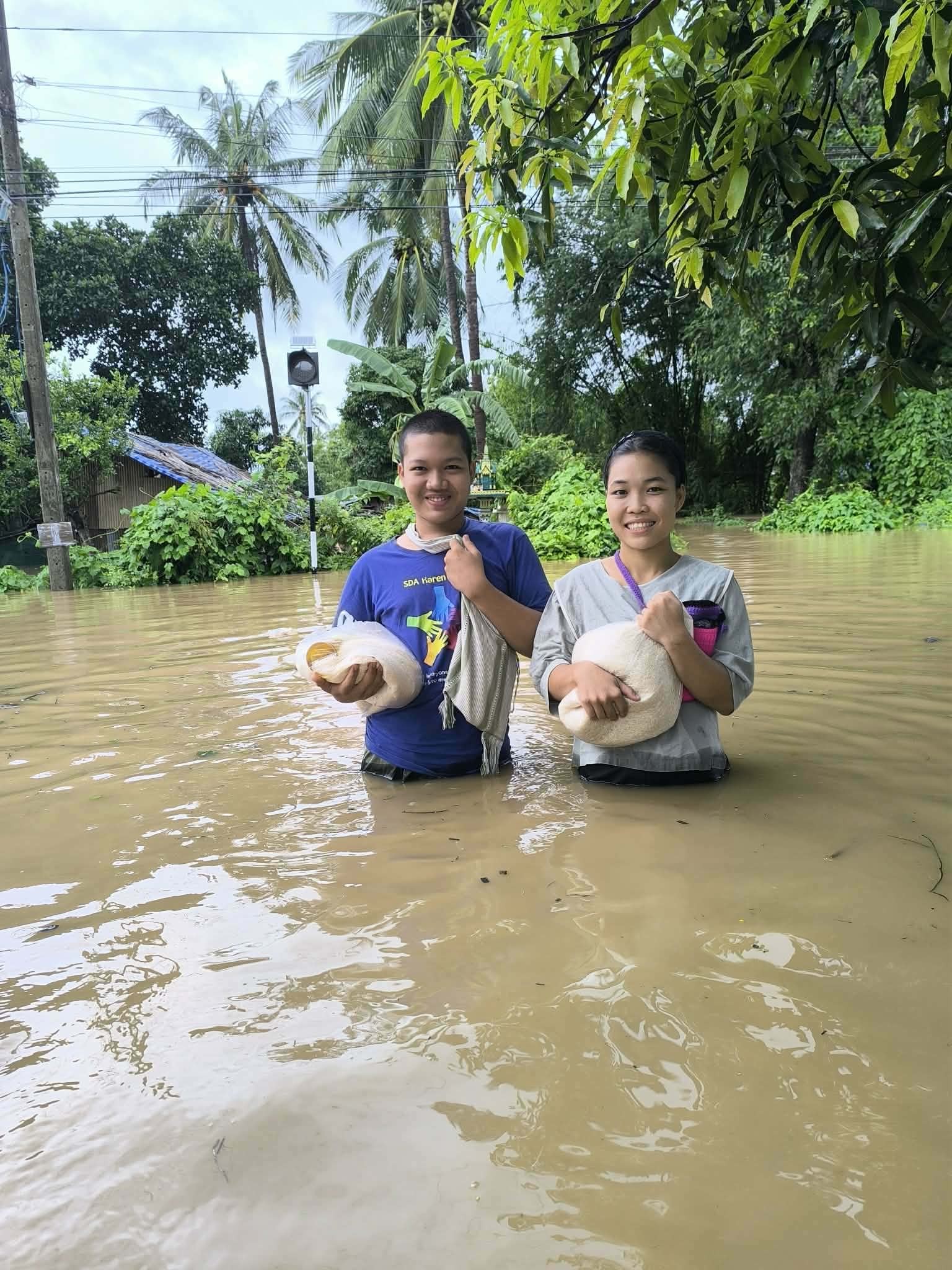
For many years, the Moei River has brought both life and danger. Around 2006–2007, flooding began to significantly affect her area. She had to move her belongings to higher places on her own. But around 2011–2012, the flood escalated and became highly devastating. Water rose to half the height of her house, and boats could enter her village. Some wooden houses were completely washed away. People lost their homes, their belongings, and even their lives. She witnessed a neighbor's child die from electric shock during the flood. That moment still haunts her. Since then, many families have rebuilt their homes higher or some with concrete, but fear remains every rainy season.
During floods, life becomes extremely difficult. Water rises from everywhere, even from the well. Electricity and clean water are cut off. She had to care for her sick mother, protect her children, and try to save her belongings. Moving her mother was almost impossible. She could only sit beside her mother, watching the water rise to the bed legs, feeling helpless and heartbroken.
She could not cook, bathe, or use toilets properly. Drinking water and food were scarce. Sometimes she survived only on what little she had and waited for help to arrive. Roads were blocked by the flood, and when roads finally opened, Thai communities and church groups brought rice, drinking water, and hygiene kits. Still, nights were filled with fear. The water often rose suddenly in the dark, and she stayed awake, watching and waiting. The flood typically lasts 3 days. Pregnant women and mothers suffered the most, struggling to protect their children under these harsh conditions. Women also faced significant difficulties during menstruation, as they often had to remain in wet clothing until assistance arrived.
After the flood, the suffering did not end. Thick mud covered her home, and cleaning took weeks. Many people became sick, especially with skin diseases. Aid came slowly. Some families received rice, medicine, and small supplies, but many did not receive enough support. Thai citizens received government support, but migrant families like hers often received little or nothing. Recovery was long, painful, and costly.
Despite experiencing floods almost every year, she remains in the area due to her deep attachment to the place and the community. Staying there allows her family to live together, while relocating would be financially burdensome and beyond her means. Also, remaining in the community enables her to continue her meaningful service as a volunteer at her church.
Suggestions for the Community Leader and the Thai Government
There is no official early warning system for her community. The community receives no clear announcements, no flyers, and no preparation meetings. She relies on social media and Thai news, which she translates and shares with her neighbors, because many people cannot understand Thai, and vital information often comes too late. Therefore:
- The government should provide early warning systems and flood-related information materials in both Thai and Burmese languages.
- The community leader should also ensure that communities in this area receive clear flood information, preparedness guidance, regular community meetings, and timely updates in both Thai and Burmese languages.