
Understanding Climate Immobility Evidence from Mae Kha Canal Community
Published on August 7, 2026
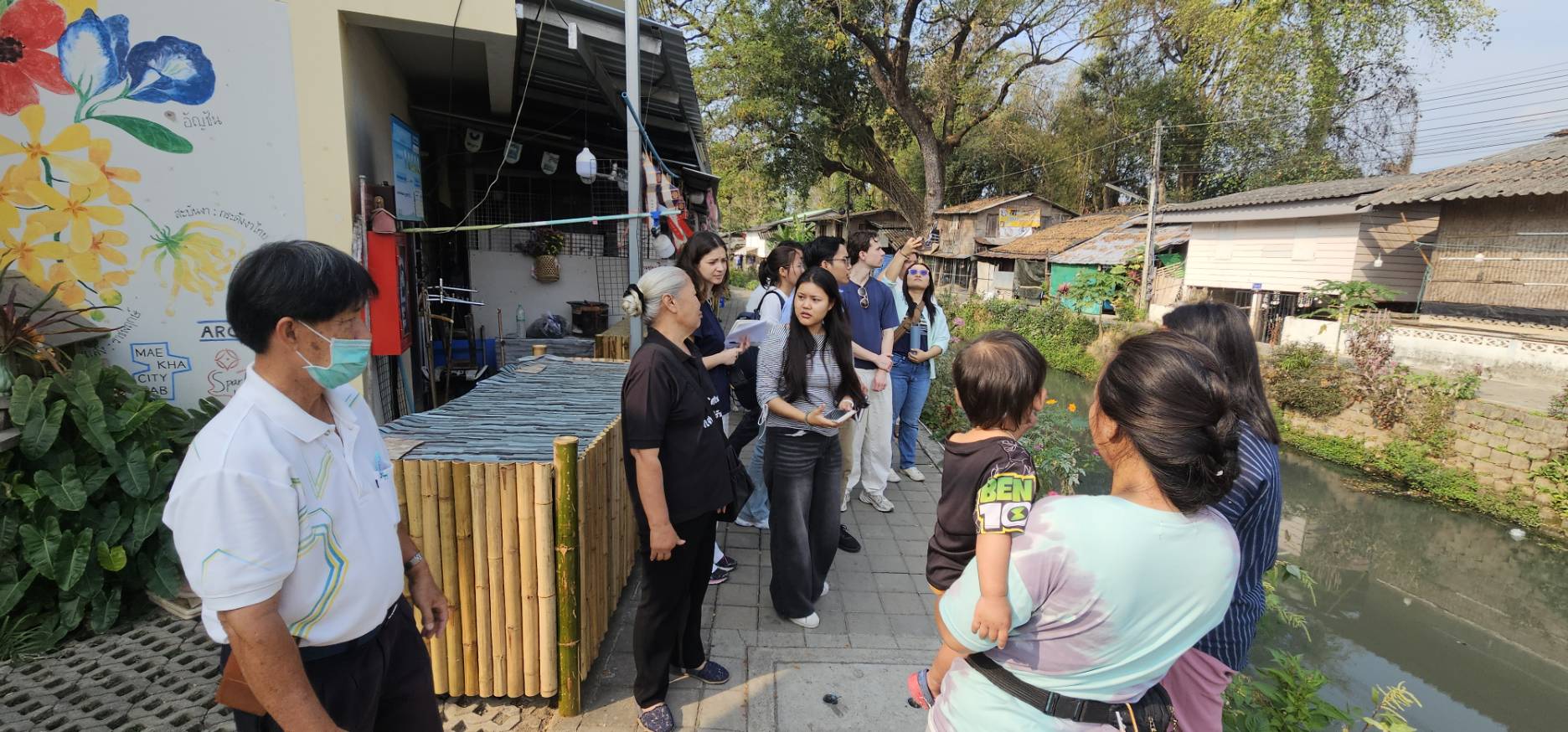
Aung Khant, L Phyo Myat Thwe, Naw Chit Su Win
Student Spotlight | Climate Change and Displacement
As part of the Climate Change and Displacement course at the School of Public Policy, Chiang Mai University, Master's students Aung Khant, L Phyo Myat Thwe, and Naw Chit Su Win conducted field-based research to explore why people choose to remain in flood-prone communities despite recurring climate risks. Their policy brief, "Understanding Climate Immobility: Evidence from Mae Kha Canal Community," examines how flood exposure, livelihoods, place attachment, and social networks influence residents' decisions to stay and adapt rather than relocate. Drawing on community interviews and policy analysis, the students found that while seasonal flooding disrupts livelihoods, damages property, and places considerable stress on households, strong community leadership, volunteer networks, and local adaptation practices enhance resilience. Rather than prioritizing relocation, the brief advocates for strengthening in-place adaptation through improved drainage and water management, flood-resilient housing, clearer land governance, and community-based disaster preparedness. Their work provides valuable insights into the growing field of climate immobility and demonstrates how student-led research can contribute to evidence-based policy discussions on climate adaptation and disaster risk reduction in Thailand. Congratulations to Aung Khant, L Phyo Myat Thwe, and Naw Chit Su Win for their outstanding work.