
"I Must Pass the Exam This Year": A Story of Flood, Fear, and Inequality in Myitkyina
Published on April 5, 2026
Author Anonymous
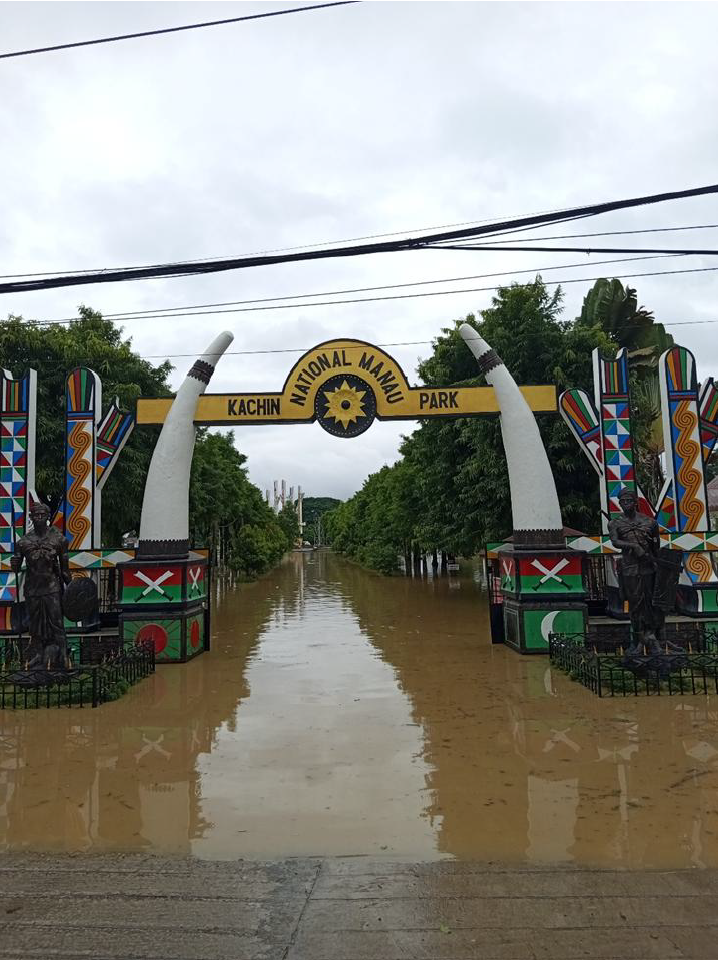
Roi Roi, a Grade 12 student from Myitkyina, shared her experience of the floods in a quiet but sad voice. Within one academic year, floodwater entered her house three times. The first time, the water came from the rising Irrawaddy River in 2024. The second and third times, heavy rainwater flooded the neighborhood again in 2025.
"The first one was the worst in 20 years," she said. "It was the worst flood in my life."
Low-lying residential areas were quickly submerged. River water and rainwater have the same destruction. The flood did not only soak houses — it erased effort, memories, and years of preparation for the exam. Roi Roi had been preparing for the Grade 12 exam for years. Because of COVID-19 and the political instability after the 2021 military coup, she had already postponed her exam. This year was her second chance.
"I must pass the exam this year," she said. "This is my second time trying. My mom will be the happiest mom on earth if I pass." But three days before the exam, the flood came at night.
"We were sleeping. I only noticed when the water touched my face."
By the time she woke up fully, it was already too late. Her books were floating. The pages were soaked and torn. Ink ran across the paper and disappeared. Her carefully written notes, summaries, important answers, practice essays were destroyed within minutes.
Apart from her Grade 12 books, Roi Roi had collected Japanese language books because she dreams of studying in Japan. She had saved money slowly to buy them.
"They are all gone," she said softly. "They were very expensive."
Roi Roi is the youngest daughter in her family, but most responsibilities rest on her shoulders during flood. She lives with her 85-year-old grandmother and her mother, who has diabetes. When the flood entered the house, she had to act quickly.
"I carried my grandmother," she said. "I put three cups of rice in my bag."
That was all she could take.
"I could only carry three cups of rice. No medicine. No precious things. We left everything because the water was flowing very rough. I was really afraid the rice would get wet. If the rice got wet, we would have nothing left to eat."
Her mother remembered that night with exhaustion and fear.
"I carried the cat cage," her mother said. "I was afraid my cats would die."
She ran barefoot in the rain, through rising water. She did not even have time to wear slippers.
"I was very tired and thirsty even though I was running in the water and it was raining at the same time," she said. "I was lucky that I found a group of young boys from the church. They helped me carry the cat cage."
In that moment, help came not from authorities but from religious volunteers.
The flood lasted five days. Electricity, internet, and telecommunication services stopped working. Without power, Naw Naw could not study. She sat in darkness, unable to attend online classes. Candle prices increased quickly because everyone needed light.
For some wealthy families, flood meant temporarily moving to hotels with electricity and stable internet. For most households, including Naw Naw's, flood meant staying in the water and in the dark.
The inequality was visible.
While some students continued studying under electric light, Naw Naw watched her books dissolve in muddy water. The flood destroyed appliances like the washing machine and generator. Even after the water receded, mud covered the floors. It took many days to clean. The house was not immediately livable. Her mother became sick during the recovery period.
But the deepest loss was not material.
"All of my childhood memories were destroyed," Roi Roi said. Wedding photos of her parents. Pictures with her siblings and ancestors. Moments that cannot be recreated.
"I feel heartbroken when I see the damaged photos," she said. "They are once-in-a-lifetime memories. Irreplaceable."
During the flood, hygiene was another serious concern. With no proper sanitation system, the family had no choice but to dispose of human waste directly into the floodwater. Later, Naw Naw suffered from skin irritation for months.
She also pointed out structural problems. "There is no proper drainage system," she said. "And the early warning system is very far to say." They received no official support from the State Administration Council. Instead, assistance came mainly from churches and temples distributing food.
Some experts have warned that projects like the Myitsone Dam could worsen natural flooding by altering the river's flow. Many residents fear that large infrastructure decisions may increase vulnerability rather than reduce it.
But beyond policy debates, Roi Roi is worried that the flood will happen again. Now, when it rains at night, she cannot sleep peacefully. The sound of heavy rain no longer feels normal. It feels like a warning.
Flood is not only water. It is uncertainty. It is interruption. It is inequality.
For wealthy families, flood is inconvenience. For families like Naw Naw's, flood threatens education, health, income, and memory all at once.
When asked what she fears most, she answered quietly:
"I am worried about my future. And I am worried the flood will come again."
The purpose of the story
This story aims to focus the experience of a young student struggling to survive during the flood in Myitkyina, highlighting how disasters affect youth beyond the visible destruction of property. Most of the time we measure the lost of the people by the damaged houses and infrastructure. However, this story emphasizes the invisible and irreplaceable losses young people face — destroyed exam notes, lost years of academic effort, erased childhood memories, and interrupted dreams. It illustrates how floods widen existing inequalities, as some students can continue studying with resources and support while others are left in darkness without electricity, internet, or safety nets. The narrative also brings attention to the mental health burden on youth, including fear, anxiety, exam pressure, and the constant worry that the flood may happen again, which deeply affects their sense of security and future. Ultimately, the story exposes the lack of effective government coping mechanisms and structural support, arguing that floods are not only environmental disasters but also generational and social justice issues that disproportionately burden young people.