
My Experience of Flooding in Hpa-An, Myanmar
Published on April 5, 2026
Kyaw Min
Hpa-An is the capital city of Kayin State, in Myanmar. I moved to Hpa-An for work and lived there for five years, from 2020 to 2024. The city is located on the banks of the Salween River. Traditionally, residents shared a common understanding that flooding occurred once every five years and was considered cyclical and predictable. However, my experience contradicted this long-standing narrative. During my first three years in Hpa-An, I did not experience flooding. Yet in 2023 and 2024, flooding occurred in consecutive years, particularly in July and August. I also saw in the news that flooding occurred again in 2025, which I did not experience it as I had already moved to Chiang Mai. This marked three consecutive years of flooding in the city's recent history.
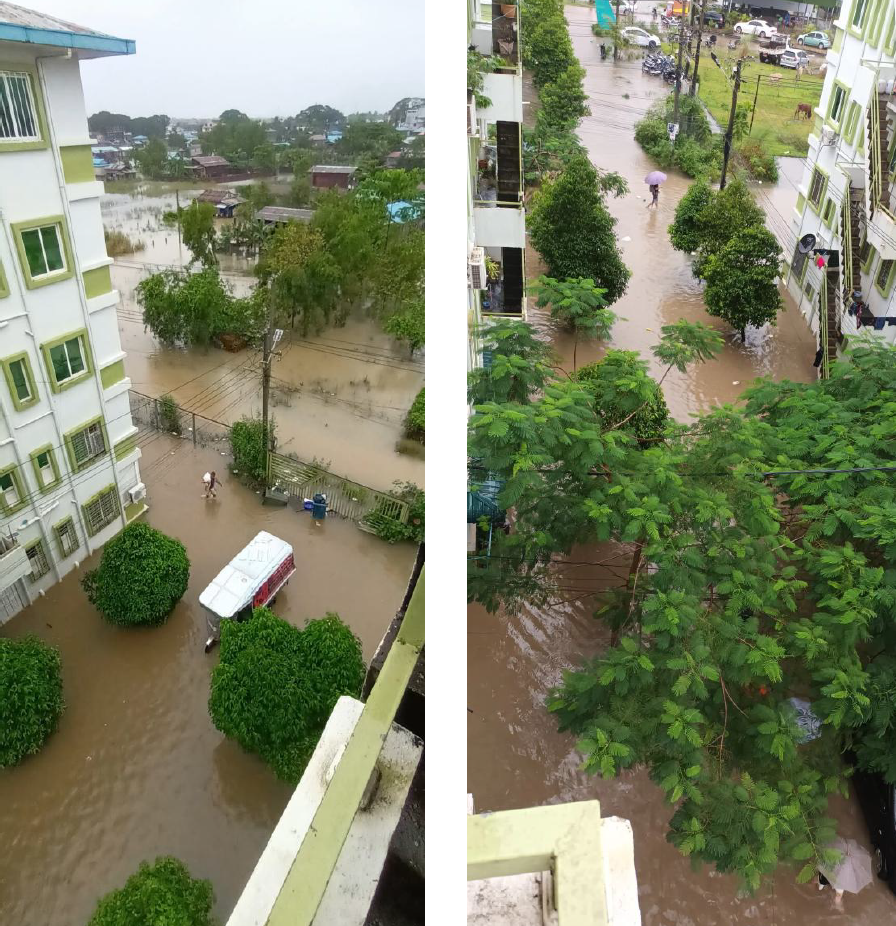
The area where I lived in Hpa-An was a low-lying part of the city, making it highly vulnerable when the Salween River overflowed. When the river's water level rose, it easily spilled into our neighborhood. I clearly remember the night the floodwaters entered my area. The water rose silently while most of us were asleep. When I woke up early in the morning, I heard noise outside. Looking out, I saw people hurriedly moving their belongings, cars, and motorbikes because our apartment compound was already partially submerged. Residents were rushing to relocate their possessions to safer places. On the first day of flooding, I was still able to walk from my apartment to other areas, so I packed my belongings and moved to a guesthouse. However, by the next day, the area was no longer walkable as the water level continued to rise, and the first floor of the apartment building was completely submerged.
I also witnessed a strong sense of community bonding among residents during the flooding. When the water started rising and people hurried to move their belongings to safer locations, neighbors helped each other carry furniture, motorbikes, and other important items. Residents who lived in safer and unflooded areas welcomed their friends and relatives to stay with them during the flooding period, providing temporary shelter and sharing basic necessities. At the same time, some families chose to remain in the apartment buildings, especially those living on higher floors looked after the belongings of their friends and others who had evacuated, ensuring that their items were protected and not lost or stolen. Through these actions, I observed how disaster strengthened solidarity within the community, as people relied on mutual support and trust to cope with the difficult situation.
As I drove around the area before the roads became impassable, I observed that evacuation centers had been opened by the government in schools, monasteries, churches, and football grounds, allowing flood-affected residents to access nearby shelters. Many people stayed there for about one week until the water receded. They cooked, ate, slept, and bathed in shared spaces, even though the centers were overcrowded. The government provided some food assistance, including rice boxes and other basic supplies at the evacuation center.
When I later returned to check my apartment room by boat during the flooding period, I noticed that not everyone had relocated. Some families, particularly those living on higher floors, chose to remain and adapt to the situation in creative ways. They used boats to travel to markets and purchase supplies. Because electricity had been cut off, they relied on generators to charge phones and computers and to provide lighting at night. They collected rainwater for washing and purchased drinking water delivered by boat. These strategies demonstrated resilience and adaptability. However, residents living on the ground floor were far less fortunate. Their rooms were completely flooded, and most of their belongings were submerged. Small houses near the apartment complex were also underwater, forcing families to evacuate and relocate their possessions.
Another situation I witnessed was the secondary displacement of internally displaced persons (IDPs) who had moved into my apartment building after fleeing armed conflict in their villages. They had already experienced displacement due to violence, yet they were forced to move again because of flooding. For them, the flood was not simply a natural disaster; it represented another layer of instability added to an already fragile life. Observing this made me reflect on how climate change interacts with political conflict, intensifying vulnerability. Displacement is no longer a single event but a repeated and compounding experience.
After the water receded, recovery became the next major challenge. When I returned to my apartment after staying away for about one week, I found the first floor covered in thick mud. Residents had to use machines and manual labor to clean their rooms. The water system had also been damaged. Reservoirs were contaminated by floodwater and required thorough cleaning before they could be used again. Recovery was both physically exhausting and financially costly.
Flooding in Hpa-An primarily affected riverbank and low-lying areas, including major roads. During flooding, transportation was difficult, since sections of the main roads connecting Hpa-An to cities such as Myawaddy and Yangon were flooded and temporarily closed. Vehicles traveling between these cities were forced to stop and wait for a few days until the water receded. The flooding disrupted trade, mobility, and access to essential goods. It was the first time I truly understood how quickly climate-related disasters can interrupt everyday life. Additionally, I observed that paddy fields were submerged, and newly planted rice crops were destroyed. Farmers lost their harvests and, consequently, their livelihoods.
The flooding in Hpa-An is one of the most memorable experiences of my life. It was my first direct encounter with a large-scale natural disaster. Beyond fear and inconvenience, it exposed deeper structural vulnerabilities: weak housing infrastructure, limited disaster preparedness, fragile livelihoods, and the compounding effects of conflict and environmental change. Through this lived experience, I came to understand climate change not as a distant environmental issue but as a force that reshapes daily life, mobility, and belonging.
This experience also reshaped my understanding of displacement. Displacement is not only about crossing international borders or fleeing armed conflict. It also occurs within cities and neighborhoods. When flood happened, some people moved to evacuation centers, while others adapted by remaining on higher floors. Climate change creates layered forms of displacement; temporary, secondary, and cyclical.
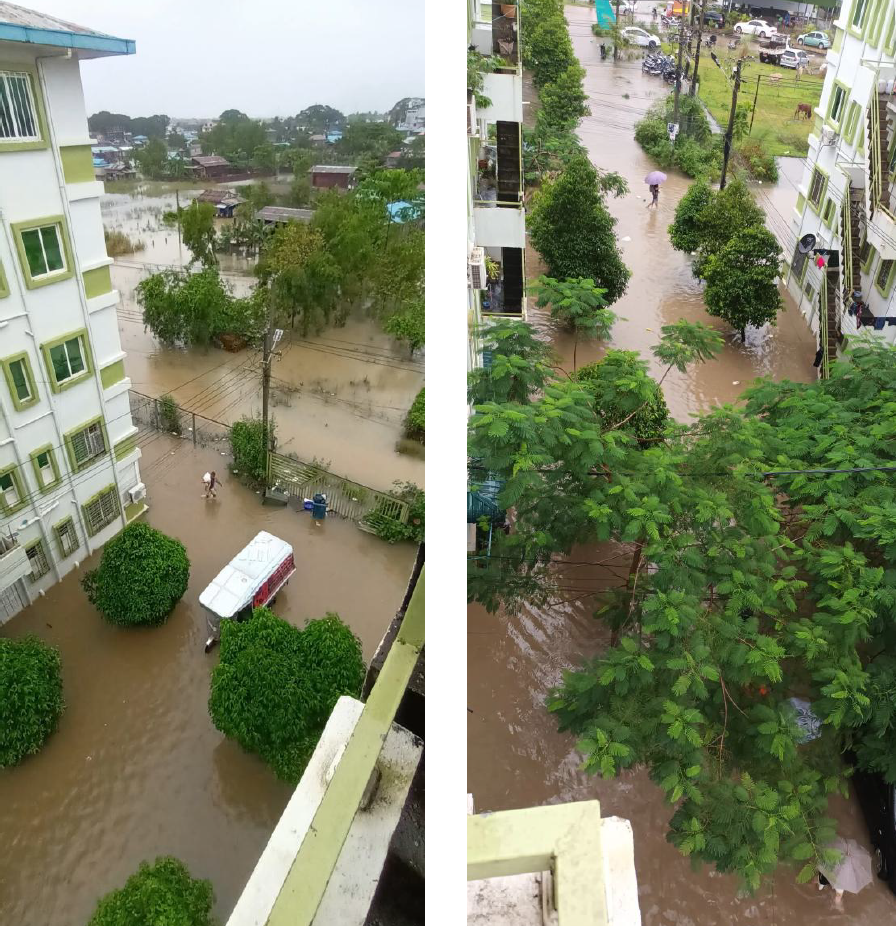
Photos: These photos show the flooding occurring at my apartment and residents are moving their belongs including motorbikes, cars to safer locations